


 Opening the Refuge
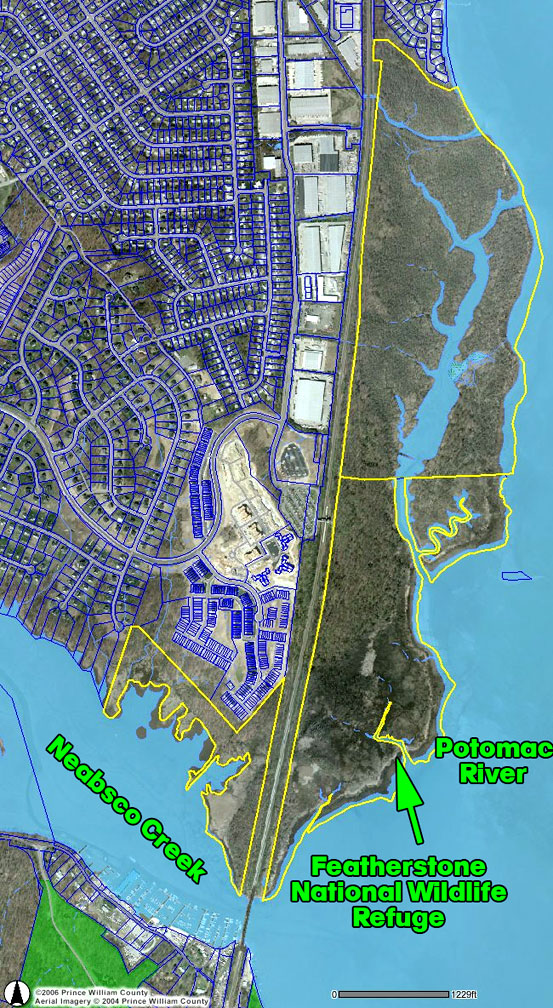
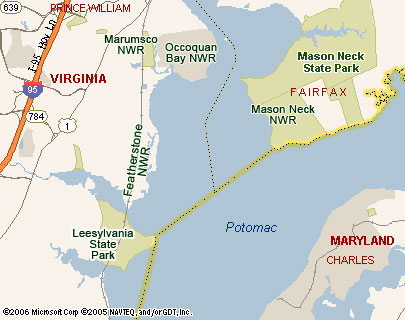
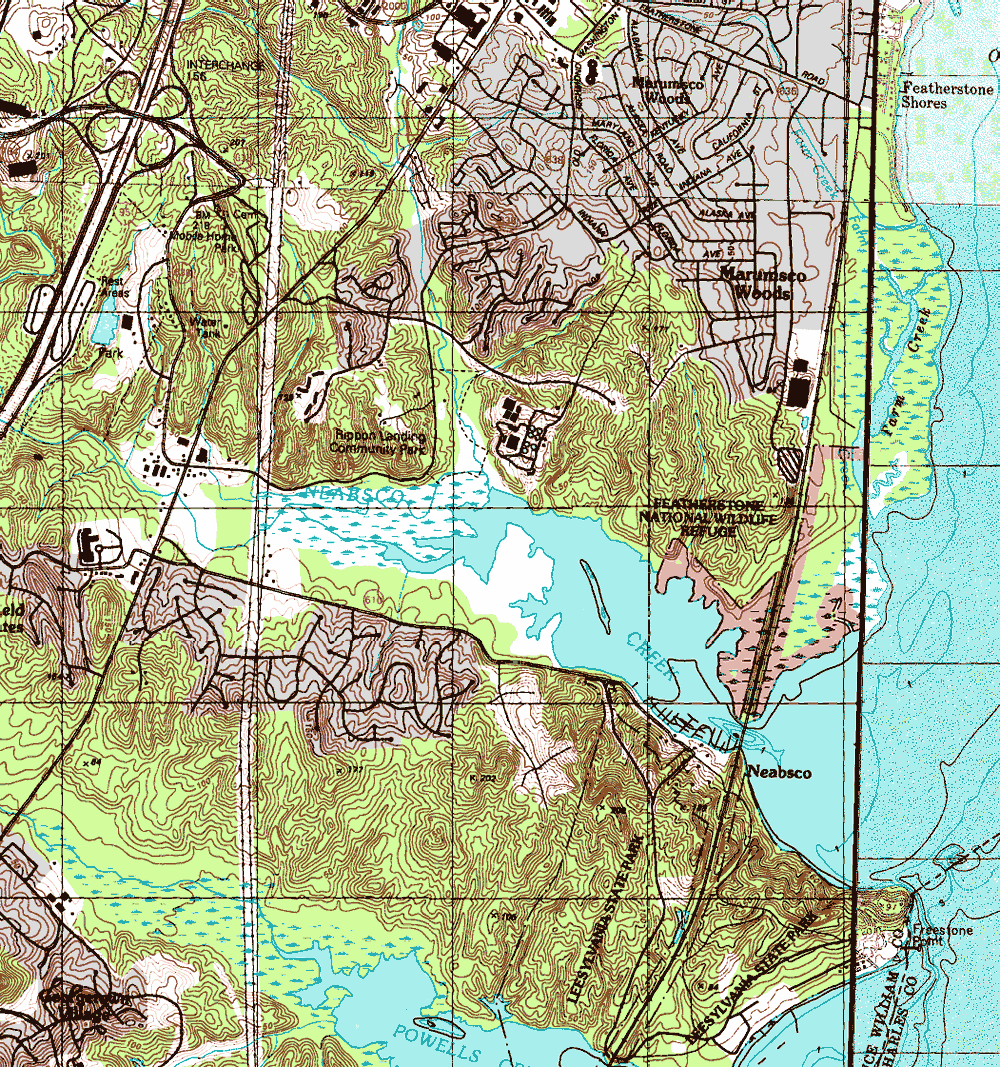
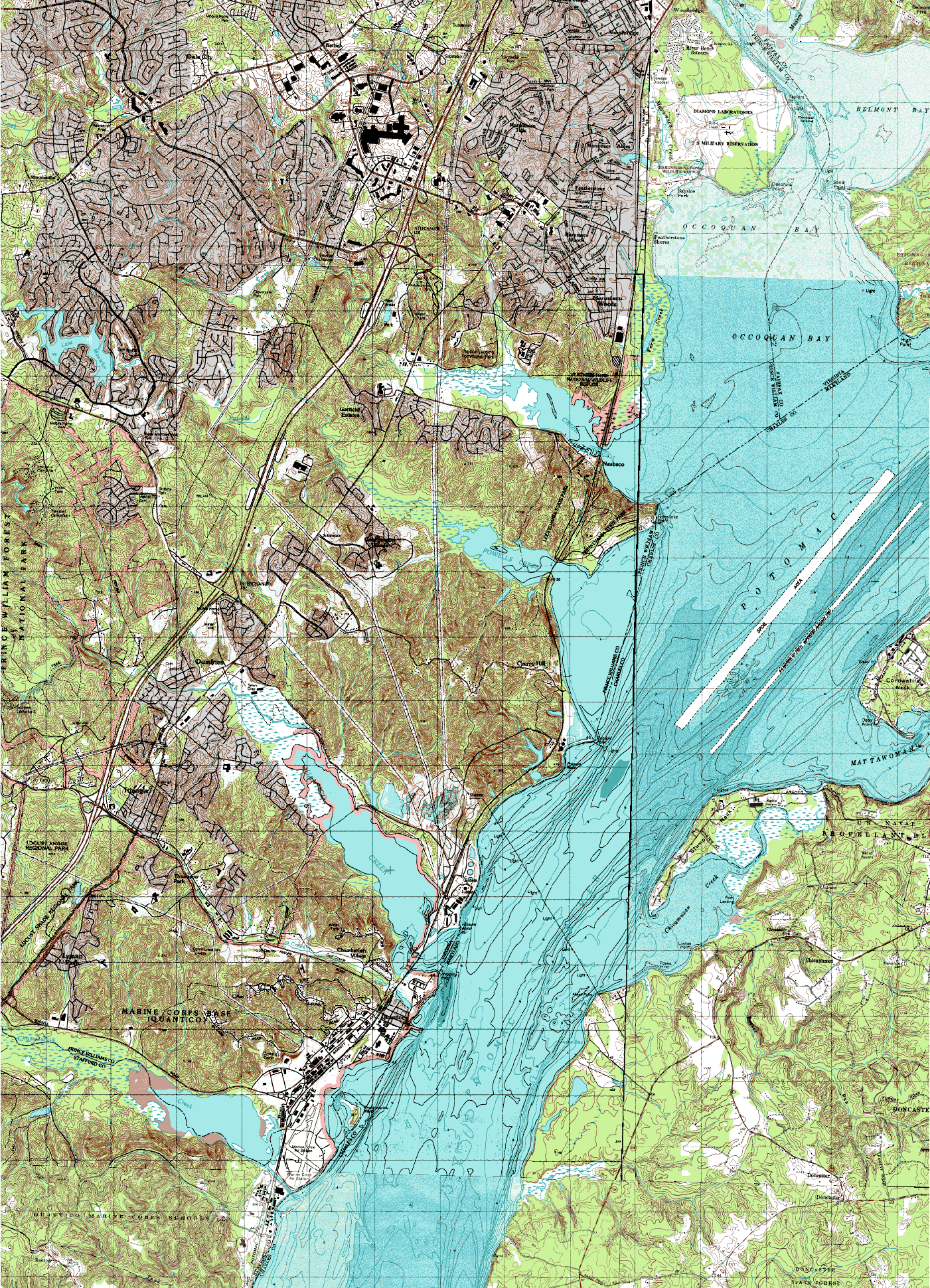
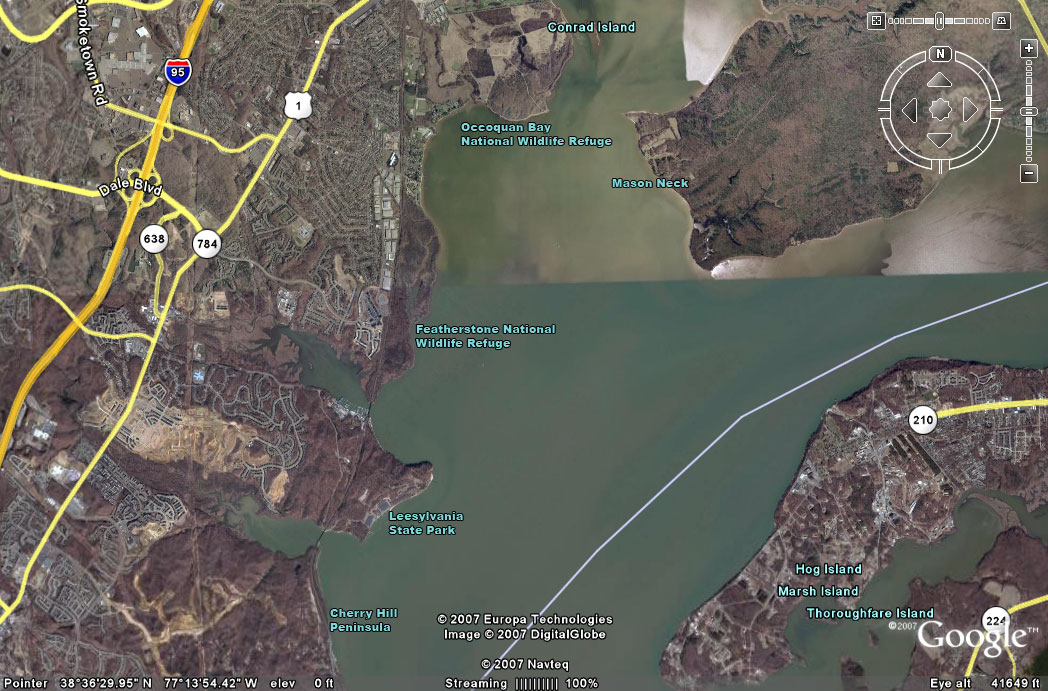
Featherstone National Wildlife RefugeThe Featherstone NWR is located along Prince William County's Potomac River shoreline between Neabsco Creek and the Occoquan River, just downstream from the Occoquan Bay NWR, upstream from Leesylvania State Park and directly across Occoquan Bay from Mason Neck NWR and Mason Neck State Park. It is a critical link to Northern Virginia's network of shoreline habitats that protect bald eagle and other wildlife communities. The Featherstone Refuge was created in the 1970's when the U.S. Fish and Wildlife Service acquired 146 acres of bottomland forest and wetlands from the District of Columbia to "protect the features of a contiguous wetland area." In 1992, the refuge nearly doubled in size when Prince William County donated an additional 161 aces. Located along Prince William County's Potomac River shoreline between Neabsco Creek and Occoquan Bay,the Featherstone Refuge is just downstream from the Occoquan Bay NWR, upstream from Leesylvania State Park and directly across Occoquan Bay from Mason Neck NWR and Mason Neck State Park. When the English arrived at Jamestown, the area was occupied by Native Americans speaking an Algonquian dialect. The Piscataway on the opposite side of the Potomac River, the Tauxenent centered on the Occoquan River, and the Patawomecks based on Marlborough Point in modern-day Stafford County may all have hunted in the marshes and riparian areas here. In 1608, someone standing on the shoreline at Featherstone would have seen John Smith leading the first European exploration up the Potomac River. The Featherstone Refuge is an important part of Northern Virginia's pattern of protected natural areas along the Potomac River. Together, these natural areas provide nesting and feeding areas for a diversity of plants and animals. Different habitat types within the refuge boundaries attract a diverse mix of wildlife. The dense and diverse marsh vegetation attracts many wading birds including the great blue heron, great egret, and double-crested cormorant. The shoreline provides important feeding and perching habitat for many raptors. Osprey, red-tailed and red-shoulder hawks, northern harriers, kestrels, Coopers hawks, and bald eagles have all been known to frequent the Refuge. Featherstone National Wildlife Refuge provides important wintering and nesting habitat for waterfowl, wading birds, and shorebirds. Wintering and nesting waterfowl include the black duck, mallard, blue-winged teal, wood duck, hooded merganser, green-winged teal, gadwall and lesser scaup. The forest provides suitable habitat and nesting cavities for pileated and red-bellied woodpeckers, barred owls, prothonotary warblers and other species. Mammals find a home here also. White-tailed deer, red fox, raccoon, gray squirrel, and beaver all use the refuge. With more than 300 acres of bottomland forests and freshwater tidal marshes, the Refuge protects needed habitat for plants and animals in Northern Virginia. It is a great spot to watch wildlife! |