2006-20082010 Comprehensive Plan Update of the Land Use and Transportation Chapters
Every five years, the County is required to review and update the Comprehensive Plan, the key document intended to shape future development in the county.
Previously the Board of Supervisors appointed a Citizen Committee to review and recommend changes to the entire Comprehensive Plan. For the 2008 2010 update, Supervisors decided on a new process and are reviewing the Comprehensive on a chapter by chapter basis, beginning with the Transportation and Land Use Chapters, which has now taken the County more than three years to complete.
February 2 2010 --- The Board of Supervisors approved new Transportation and Land Use Chapters of the Comprehensive Plan. Although the public hearing was closed, some citizens shared their views at Citizens Time. Mid-county SRR communities were well represented, showing strong support for the draft text intended to better protect the Occoquan Reservoir.
After Citizens Time was closed, Chairman Stewart and Supervisor Jenkins proposed substantive changes to the drafts, including one that removes public hearing requirements for the addition of lights at ball fields countywide.
Other amendments targeted the Mid-County SRR district, where the majority of Supervisors rejected draft text intended to increase protection for environmental resources in close proximity to our public drinking water supply, including creation of an Occoquan Reservoir Protection Overlay Zone. Instead, most Supervisors voted to maintain a business-as-usual approach, negating input provided by citizens over the last two years.
Citizens were not provided with an opportunity to read or review the amended text. There was little discussion on most amendments, making it difficult to understand or assess what was being proposed.
In the end, Supervisors approved the Transportation Chapter by unanimous vote. The Land Use Chapter was approved by a 7-1 vote, with Supervisor Mike May standing alone in advocating for a transparent process and a more positive Comprehensive Plan.
You can read more about PWC Comprehensive Plan updates and share your views on our blog here.
Background
In 2007 the Board appointed two separate committees: a Land Use Advisory Committee (LUAC) and Mobility Committee, to update the Land Use and Transportation chapters. The draft for the Land Use Chapter incorporated recommendations from the Housing Board to update the Housing Chapter.
Except for an all-day joint seminar on July 12, 2007, the Land Use Advisory Committee and the Mobility Committee developed their chapters separately. The recommendations in each chapter reference the same "smart growth" principles, but the chapters have significantly different approaches on where to encourage new development.
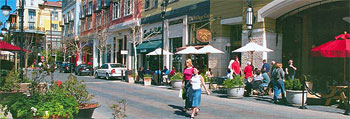 The Mobility Committee used the County's build-out analysis to identify the projected population increase through the year 2030. The committee then recommended that the county encourage new development to accommodate that growth at transit-oriented densities, which the committee defined as 20 residential units per acre. The Mobility Committee used the County's build-out analysis to identify the projected population increase through the year 2030. The committee then recommended that the county encourage new development to accommodate that growth at transit-oriented densities, which the committee defined as 20 residential units per acre.
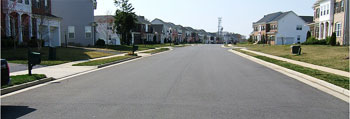 In contrast, the Land Use Advisory Committee "centers" could accommodate dramatically higher population growth than is predicted by 2030. The centers are also scattered across the county, without any way to shape which areas will actually be developed. In contrast, the Land Use Advisory Committee "centers" could accommodate dramatically higher population growth than is predicted by 2030. The centers are also scattered across the county, without any way to shape which areas will actually be developed.
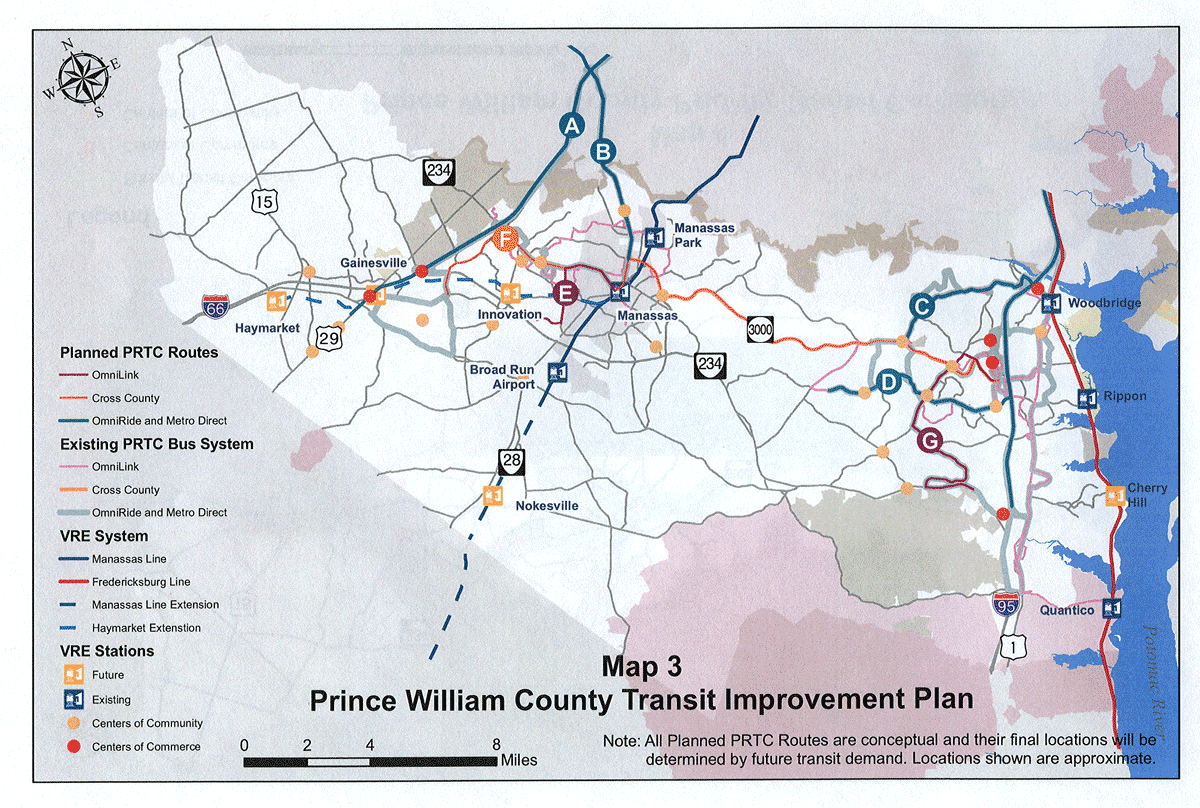
The failure to identify where development should occur at transit-oriented density makes it impossible for VRE or PRTC to plan cost-effective transit systems.
Should this occur, Prince William would be in a position of playing catch-up to development for the next 22 years, rather than integrating transportation and land use planning so increased bus/rail transit services could reduce highway congestion.
The Planning Commission and the Board of Supervisors, which makes the final decision, will determine how to align the inconsistent drafts proposed by two separate committees.
Residential Densities - How much is enough?
The 2008 update aims to plan development for Prince William County until 2030. The 2008 review aims to provide a plan that will accommodate projected population increases to 2030 in a manner that protects quality of life for all residents.
| Year |
|
|
|
Surplus/Deficit |
| 2008 |
386,047 |
131,309 |
180,852 |
49,543 |
| 2025 |
523,668 |
178,118 |
180,852 |
2,734 |
| 2030 |
555,012 |
188,780 |
180,852 |
7,928 |
Based on the Planning staff analysis, the current Comprehensive Plan already plans for sufficient residential development to accommodate the projected population increases in Prince William County until 2025. With the addition of planned residential densities for the categories excluded from the County's build out analysis, it appears likely that the County has planned for adequate housing to accommodate populations projections to 2030. Opportunities to better manage growth and development
The 2008 Comprehensive Plan update is an opportunity to pursue "smart growth" strategies:
-
RELOCATE residential densities FROM outlying areas and environmentally sensitive lands TO vacant and under-developed areas adjacent to transit;
-
Revitalize existing commercial centers;
-
Plan for adequate parkland and open space;
-
Plan for school sites in locations where the majority of students can walk or bike to school.
The Mobility Committee recommended six specific locations that were the highest priorities for enhancing transit services. These locations reflect the areas proposed for revitalization, as well as areas where developer interest is high.
Some of the "centers" proposed in the Land Use chapter match up with these six areas. However, development in many of the proposed Centers of Community would make the proposed increase in transit services financially impossible.
In addition, the Land Use Advisory Committee is recommending changes to allowed residential densities in the Semi-Rural Residential district, mixed use categories and others.
Click here to read more about the Land Use Advisory Committee recommendations...
Click here to read more about the Mobility Committee recommendations...
Click here to share your views with Commissioners and here to email Supervisors.
|