New Cherry Hill Plan: Not Ready For Prime Time
(from the November, 2003 Prince William Community Report)
Prince William is rich with unique natural areas and scenic vistas. Outstanding
among these natural assets is the Cherry Hill Peninsula. With nearly 1,800 acres
of rugged contours blanketed with deciduous forest, this area is the largest
remaining riparian forest along Northern Virginia's Potomac River shoreline.
This singular natural asset has remarkable environmental and economic value.
The landscape is rugged, unlike anything else in Prince William: 40% and 50%
slopes are common, creeks and wetlands wind through the erodible soils that
cover 80% of the site. The entire area is underlain with marine clay, a well-know
factor for slope instability and other foundation problems. A long history of
previous attempts to develop on these soils shows that the result is homes and
transportation facilities at risk:
1933 - A landslide in the railroad cut north of Cherry Hill derailed a freight
train, causing a collision that killed two people and injured 14 others.
1992 - The Virginia Dept. of Conservation and Recreation road construction
project through Leesylvania State Park resulted in a landslide.
1996 - Two Newport Estates homes were prevented from sliding down a hill, at
the cost of $1 million.
1998 - The Virginia Dept. of Transportation's exit ramp from I-95 to Route
1 collapsed.
2003 - The landslide at a Fairfax's development destabilized homes and has
raised questions about who must fund remediation needs.
Undeterred by historical information, the current Board of Supervisors rezoned
the Cherry Hill Peninsula in January 2001 amid a huge outcry from citizens.
Many hundreds of residents from Gainesville to Woodbridge pointed to the conservation
value of the area, potential for eco-tourism opportunities and widespread community
desire to reverse Prince William's regional reputation as a pathetic steward
of natural assets.
Since that time, the landscape is largely intact. Last year the land was sold
to KSI Services, who appears to be unfazed by the considerable risks associated
with developing the Cherry Hill Peninsula. This past spring, KSI flatly turned
down an opportunity to explore a conservation solution with a national land
trust before a meaningful discussion could begin.
Although fully aware of the proffered conditions before purchasing the land,
this past summer KSI requested some significant changes to the complicated proffer
package that was approved in 2001. County government claims that these changes
comply with the "intent" of the original rezonings and special use
permit, but available information indicates otherwise.
In 2001, government officials and the business community were vocal in their
support for the proposal because the Southbridge development would bring office
space to the area. This new plan includes substantial reductions to construction
of office space, but hangs onto the retail square footage. Does this comply
with the "spirit and concept" of the approved development plan?
Once again and without public input, government is rejecting new office space
and supporting more retail. The Cherry Hill Peninsula is just a couple miles
from Potomac Mills, where there is already an abundance of retail space. The
original Southbridge vision for retail was that "It's meant to be more
specialty retail... It's not Wal-Mart, Kmart, Sam's Club." [Mike Anderson,
Washington Business Journal, February 19, 2001] With a Wal-Mart now located
at the entrance to the Southbridge development, it appears these commitments
were made to be broken.
Our County government has also approved significant revisions to the road network.
The Southbridge 2001 proffered commitments included assurances that Old Cherry
Hill Road would not be used as a point of egress for the proposed development.
Area residents will be surprised to find that an additional full 4-lane divided
section of Harbor Station Parkway east with a connection to existing Old Cherry
Hill Road is now added to the development plan.
These changes cause significant changes to conservation and environmental requirements
included in the Master Rezoning Plan. Although government claims that KSI will
honor these commitments, no details on these changes or proffer analyses are
included or referenced in available documents to back up this vague statement.
It's business as usual. Common sense continues to be conspicuously absent from
Prince William land use dialogues. In the case of Southbridge/Cherry Hill, Prince
William County has approved KSI's request to make changes to proffered commitments
through a quiet administrative process with no opportunity for public review.
The authority to revise the proffers without public comment may or may not
be legal, but it is certainly not fair to residents. When local government needs
no public process to change proffered commitments, how can citizens feel confident
that promises made are promises kept?
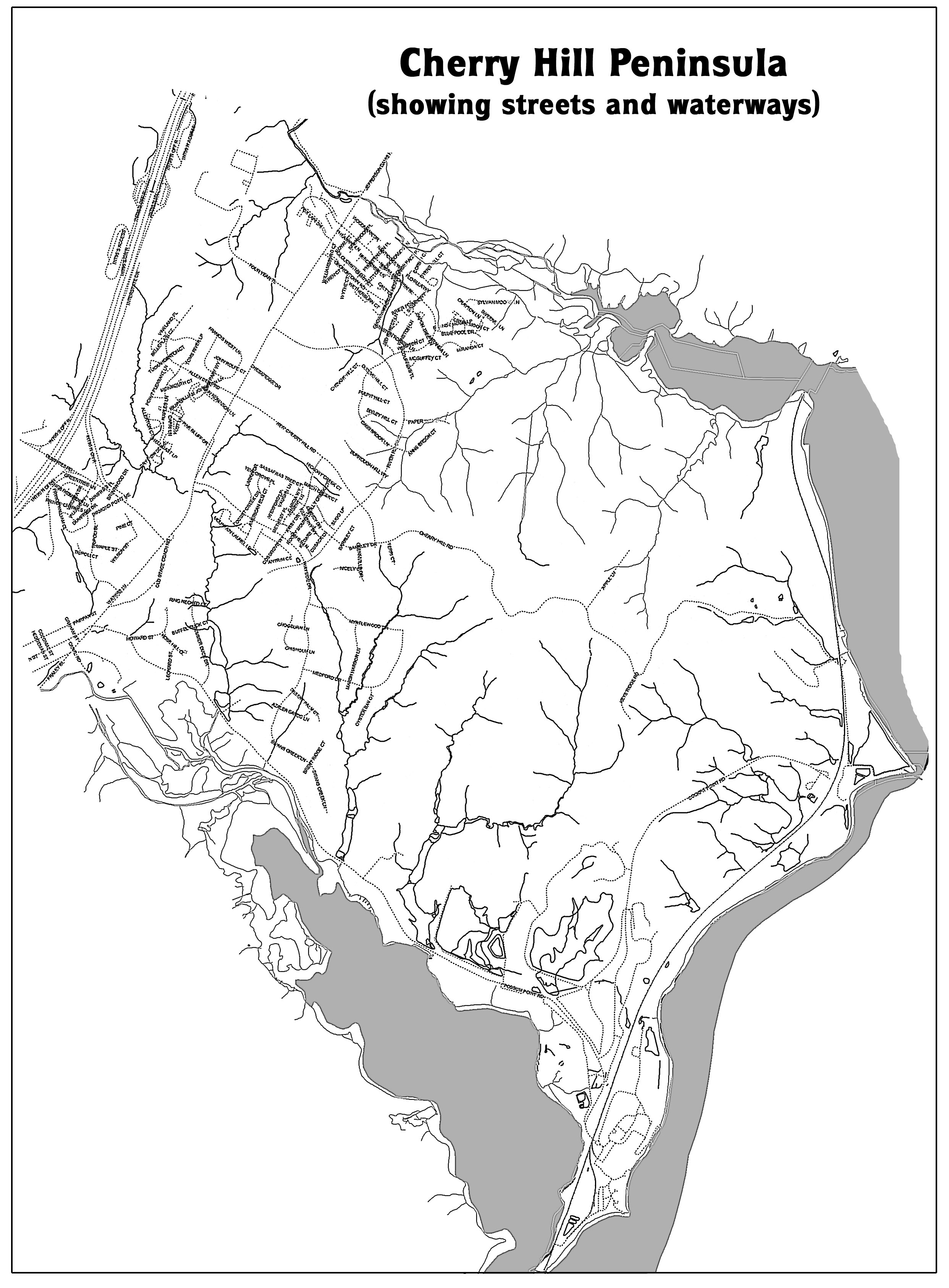
(See map of Cherry Hill Peninsula,
showing roads and waterways) |