



Prince William Road Bond Projects |
| Battlefield Bypass |
| Buckland Bypass Concept |
| Tri-County Parkway |
| Route 1 Location Study |
| Route 1 Corridor Study for Fairfax and Prince William Counties VDOT, 1998 |
| Anatomy of a Bottleneck: The U.S. Route 29/Interstate 66 Interchange at Gainesville, Virginia, by E.M. Risse, Synergy Planning |
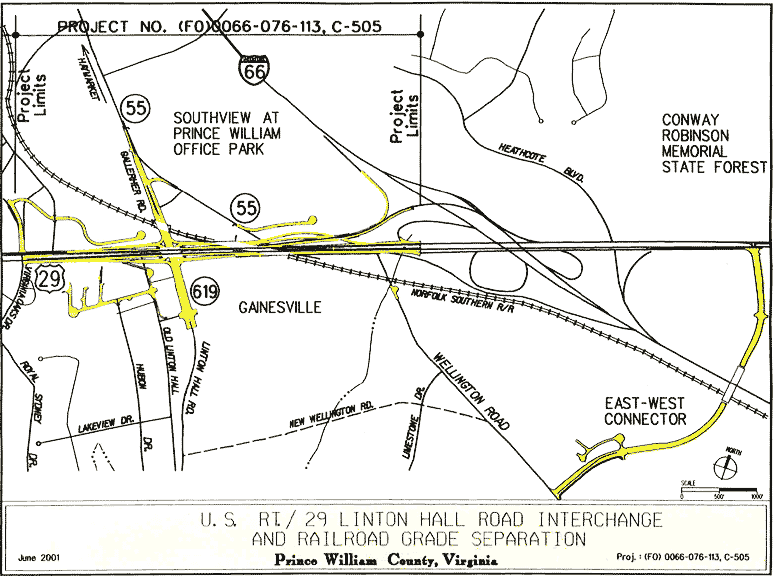
| East/West Connector, Linton Hall Road - VDOT Map Showing Road Alignment and Safety Improvements |
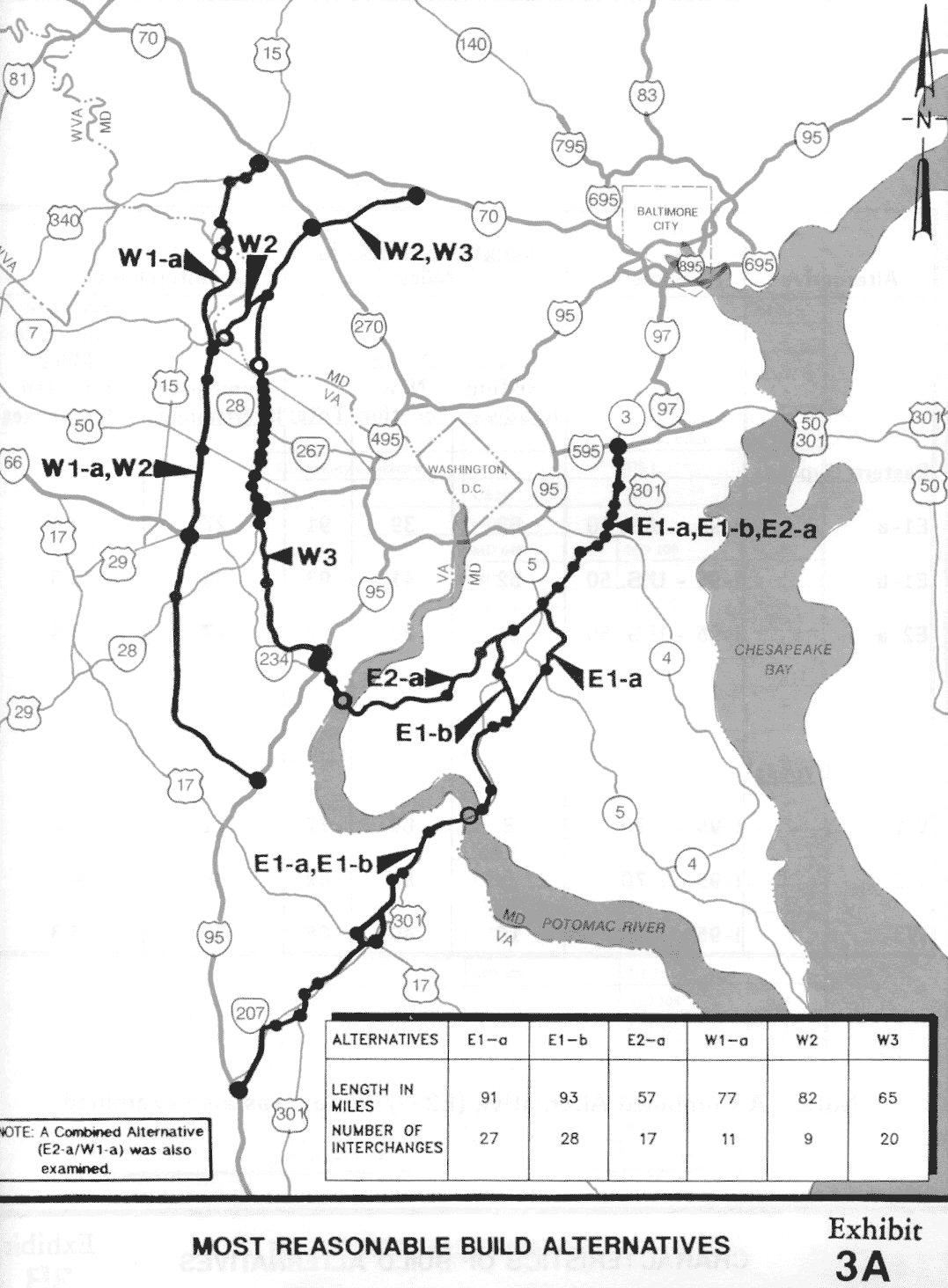
| 1988-1990 Washington Bypass Study - Build Alternatives |
PWCA comments on the I-66 Transportation Demand Management Study This timeframe may be driven by a determination to complete the report before the current administration changes at the end of the current governor's term. While speedy decisionmaking is laudable, we encourage VDRPT to maximize transparency and obtain citizen comments, as well as input from local/state/Federal agencies on the draft, before completing the final report. VDRPT should provide an opportunity for public comment whenever the draft report is released, notify all participants who registered at previous public comment sessions regarding the availability of the report, and stimulate news stories to encourage input on the draft from others who may not be on the official list of stakeholders. VDRPT should officially notify towns as well as counties in the area affected by VDRPT studies. Local towns in Virginia have authority over land use decisions. Town perspectives regarding transportation projects and their impact on local land use may differ significantly from the county perspective. Prince William County leaves land use plans within town boundaries as a blank spot on the county land use planning maps. In particular, VDRPT should notify the Town of Haymarket when the draft I-66 Transit/Transportation Demand Management Study is available for review and comment, before finalizing the report. The Town of Haymarket has officially expressed its opposition to Gainesville-Haymarket Extension plans for locating an end-of-line Virginia Railway Express (VRE) station within the town boundaries. Haymarket officials understand that the town would absorb costs and receive traffic congestion, but no benefits, from a VRE parking lot that encourages Culpeper/Fauquier/Warren county residents to drive to Haymarket before commuting further towards DC. DRPT should get Haymarket comments before proposing a park-and-ride lot at the intersection of Route 15/I-66. The current study, as described at the public input session on September 24 in Gainesville, shows a serious disconnect between transportation and land use planning. The focus on increasing capacity to move commuters to job centers at Tysons, in the Rosslyn-Ballston corridor, and to DC ignores the opportunity to use taxpayer-funded investments in new transit capacity to stimulate transit-oriented development. The I-66 corridor outside the Beltway offers a great opportunity to maximize the return on investment in transit... but the study appears to ignore the land use implications of the proposed locations for "bus rapid transit" facilities. In particular, any transit investment in a Cushing Road facility (intersection of 234 Bypass/I-66) is a waste, if you're looking for transit-oriented development. Check the planning and zoning, and you'll see just a few miles down the Route 234 Bypass is the proposed University Town Center and the Innovation site. It's a perfect opportunity to leverage public investment in a George Mason University campus, plus the multi-jurisdictional Hylton Performing Arts Center and Freedom Aquatic & Fitness Center. A VRE station is proposed as part of Innovation. That site offers a chance for multi-modal transportation, instead of a park-and-ride operation at Cushing Road that will become a dead-end, transportation-only facility. In partnership with VDOT, DRPT should review county comprehensive plans and identify the potential impacts regarding state-funded transportation responsibilities. The next draft of the I-66 Transit/Transportation Demand Management Study should set an example of how publicly-funded transportation in new transit capability should be integrated with land use plans for new development. State officials should no longer turn a blind eye to the opportunities or the impacts on how new transportation capacity can stimulare sprawl vs. transit-oriented development. While it may be finally unrealistic to implement full Bus Rapid Transit (BRT) capabilities on I-66 in Prince William County, based on the current and projected low-density development patterns for residences and houses, it makes sense to retain the potential for upgrading commuter-based transit services in the future. Any initial priority/express bus services should be capable of an upgrade, over the next 30 years, to dedicated right-of-way, specialized vehicles, and in-line BRT stations with direct access to I-66. The transit issues in western Prince William County are not restricted to commuting to job centers in other jurisdictions. Focusing exclusively on the various ways to move Prince William residents to jobs in other jurisdictions ignores the socio-economic impacts of perpetuating Prince William as a bedroom community. Prince William needs circulator bus capabilities, to improve transit within the County (such as between Gainesville and Manassas, along the 234 corridor). Any recommendation to study Route 28 options for mass transit to Dulles should also include studying alternatives for using mass transit services (such as an upgraded Omni-Link operation) to reduce traffic congestion within Prince William/Manassas/Manassas Park. Thank you for the opportunity to comment on the I-66 Transit/Transportation Demand Management Study.
PWC Road Construction Bonds in the News: County approves $87 million road bond referendum
|
 Home | Upcoming Events | About Us | Resource Issues | News | Local Contacts
Maps | Photos | Publications | Youth Education |FAQ's | Links | Membership